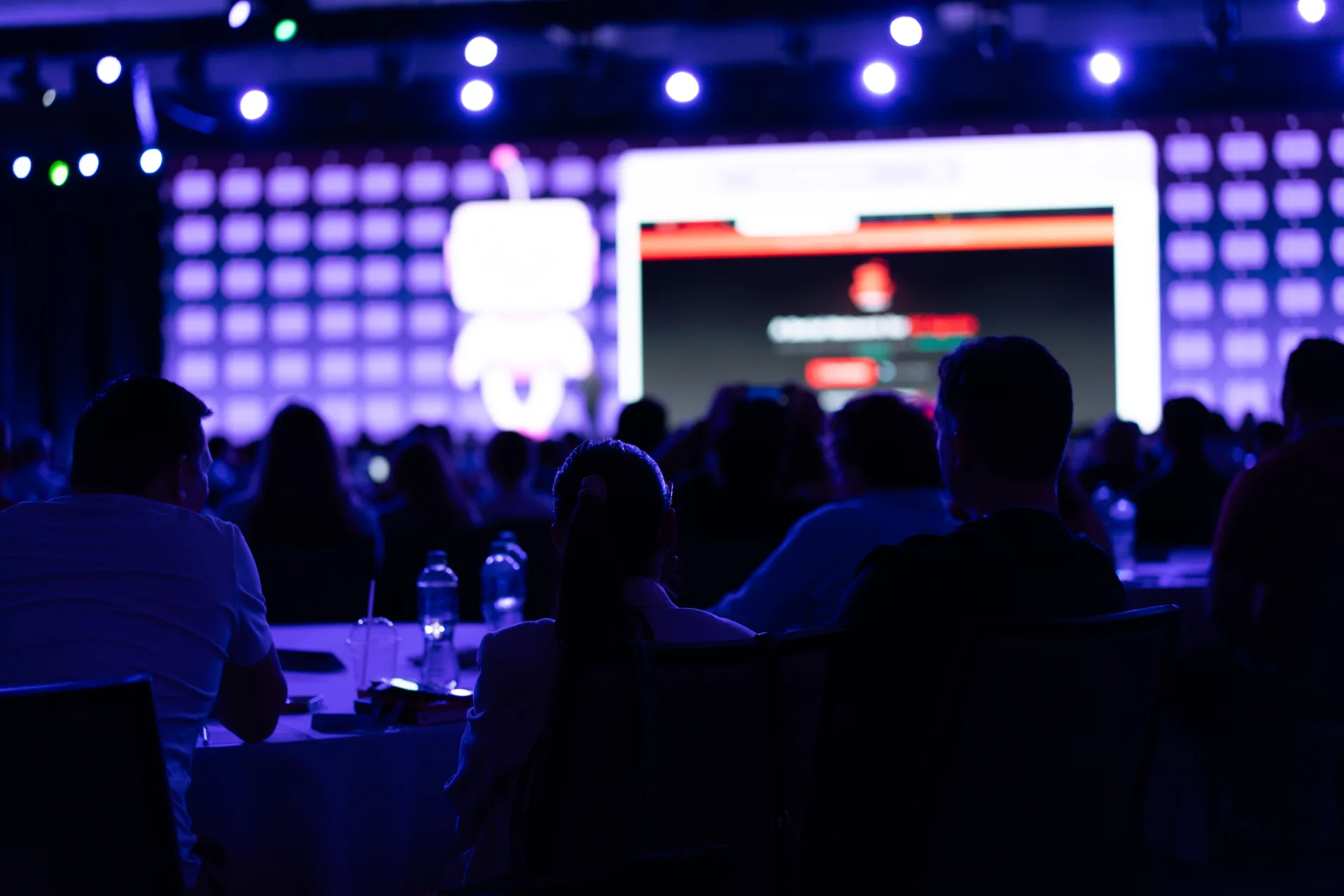
High-stakes keynotes are the segments where a visible production failure becomes a brand problem — CEO walk-on, product reveal, investor-facing general session, or the keynote your stream audience will clip for six months. Choosing a production partner for those moments is not about finding the lowest bid on speaker counts. It is about matching partner capability to the segment that cannot fail, the capture requirements marketing will inherit, and the show-day authority structure that protects schedule and message when something runs long. This guide defines how to tier keynote stakes, evaluate partners on accountability instead of gear lists, and align production selection with business outcomes your leadership team can defend.
What makes a keynote high-stakes
Not every general session keynote needs a touring switcher and a named technical director. Overspecifying burns budget; underspecifying burns credibility. Tier the keynote before you shortlist partners — not during load-in when someone asks whether the demo needs hot backup.
High-stakes keynotes share at least one of these conditions:
- Leadership visibility — C-suite or board-level presenter whose segment will be recorded, streamed, or reviewed by stakeholders who compare this quarter to last.
- Single-path failure cost — Product demo, live data reveal, or scripted moment where a freeze, audio drop, or IMAG miss cannot be recovered in the room without visible damage.
- Capture dependency — Marketing, IR, or comms need clean program audio, consistent camera framing, and record-ready segments for post-show assets — not a reshoot.
- Schedule immovability — Hard broadcast window, simultaneous stream, or back-to-back programming where overrun cascades into catering, awards, or a live feed cut.
- Hybrid or global audience — Remote viewers notice delay, audio drift, and slide legibility problems faster than the room does; production parity is part of the stakes calculation.
If none of these apply, your keynote may be important but not high-stakes in production terms. Tier honestly. Partners who quote flagship labor for a standard breakout keynote will overbid; partners who quote breakout labor for an investor keynote will compress rehearsal first.
Partner evaluation criteria that matter more than gear
Production partners look interchangeable on paper — same screen size, same wireless count, same camera package. The difference shows up in who owns message fidelity on show day, how rehearsal is protected when load-in runs long, and whether the partner asks clarifying questions about your outcome or only about head count.
Evaluate partners across five dimensions before you compare line items:
- 1.Outcome fluency — Can they restate your primary business objective in one sentence? Launch credibility, partner confidence, employee alignment, content capture for a six-month campaign. Partners who cannot paraphrase your goal are pricing labor, not protecting your keynote.
- 2.Show-day governance — Who is the named show caller or technical director? Do they have authority to hold segments, skip B-roll, or extend demo recovery without a committee? Marketing should know the name before doors open — not discover it when the CEO runs eight minutes over.
- 3.Rehearsal discipline — High-stakes keynotes need dedicated rehearsal on show hardware, not a compressed sound check. Ask how many hours are allocated for walk-on, demo with live switching, and teleprompter or confidence monitor alignment — and what happens when rehearsal reveals a slide animation that crashes the switcher.
- 4.Risk planning — Require a one-page failover summary: what fails, who decides, what the room and stream see during recovery. "We have backups" is not a plan. Name the redundant path for the segment that cannot fail.
- 5.Post-show accountability — Partners who improve year over year can describe their debrief format: what worked, what nearly failed, and what you should change before the next RFP. Selection is not just show-day performance — it is whether the relationship gets sharper after load-out.
Partners who push back with clarifying questions about tier, capture, and rehearsal are usually protecting your keynote. Partners who only ask about panel count are building a bid, not a partnership.
Red flags and green flags in partner responses
Shortlist partners who demonstrate operational competence in writing before you award. Identical-looking proposals hide different assumptions about show calling, program audio isolation, and who absorbs dock delays.
Green flags:
- Written sight-line or legibility validation process tied to your deck — not generic venue photos
- Named roles for load-in, rehearsal, show, and strike with hours included, not "TBD hourly"
- Program audio routed to a dedicated bus for record and stream — house mix separate
- Rehearsal block protected in the bid even if union dock schedules compress load-in
- Clarifying questions about hybrid delay, demo backup path, or IMAG director assignment
- Post-event report template included in scope
Red flags:
- Gear list response with no mention of show caller, TD, or producer role
- Rehearsal billed hourly only — first cost cut when load-in runs long
- "Single path is fine" for a keynote you tiered as high-stakes
- No named failover for wireless, demo laptop, or switcher on the flagship segment
- Assumption that marketing provides playback, graphics, or stage management without confirmation
- Bid significantly below peers with no written explanation of what is omitted
The expensive bid often includes show calling, rehearsal, clean program audio, and a named post-show report. The cheap bid discovers those gaps during the CEO walk-on.
Questions to bring before you sign
You do not need to become an AV engineer to choose the right partner. You need a question set that forces vendors to prove they understand keynote stakes — and separates partners who plan for failure from partners who hope it does not happen.
Bring these to finalist conversations. Require written answers.
- 1.Who calls the keynote sequence, and who has authority to hold or skip segments? One name. Marketing and events should align on that authority before show day.
- 2.What is redundant on the segment that cannot fail? Power, signal, switching, wireless — ask specifically about the CEO keynote or product reveal. Name the path and who switches.
- 3.How will you validate sight lines and slide legibility before travel is booked? Require a process against your seat map and deck — not a promise to "check on site."
- 4.What is your rehearsal deliverable for this tier? Walk-on timing locked, demo run end-to-end on show hardware, stream delay tested if hybrid. Define what "rehearsal complete" means.
- 5.How is program audio isolated for capture? Presenter lavs and playback on a dedicated bus; house music and audience reaction off the archive. IR and marketing cannot use audio where walk-on track bleeds into the first sentence.
- 6.What gets logged during the show? Incident and near-miss logs feed next year's partner selection and protect marketing when leadership asks why a segment looked rough on the recording.
For a full RFP question set aimed at marketing leaders, see our companion piece on production RFP questions. Partner selection and RFP design work together — but selection starts with whether the partner understands what is at stake, not whether their line items match last year's spreadsheet.
Business outcomes: what the right partner protects
Keynote production selection is a brand and operations decision measured after load-out — not in speaker wattage or truss weight. Finance and comms leadership care whether the session supported credibility, message retention, and asset reuse. The right partner ties production scope directly to those outcomes when tier and governance are enforced in the brief.
- Leadership credibility — Clean IMAG framing, legible slides at the farthest seat, and demos that run on schedule signal operational competence. Visible AV failure reads as organizational failure to an audience trained to notice.
- Content leverage — Marketing ships the planned asset package when program audio is clean, lighting is balanced for camera, and multi-camera coverage matches the edit plan. Re-editing to fix production gaps delays every downstream channel.
- Schedule protection — Named show-day authority and protected rehearsal reduce the overrun cascade: demo recovery, compressed Q&A, leadership leaving early while cameras still roll.
- Hybrid and stream parity — Remote audiences stay engaged when delay, audio drift, and slide legibility match the room experience. Partner selection for high-stakes keynotes must include stream rehearsal, not just room rehearsal.
- Risk defensibility — Documented redundancy and failover plans give comms a factual answer when leadership asks why the high-stakes line item exists — instead of a post-mortem about what should have been redundant.
- Program consistency — For recurring keynotes — annual meetings, roadshows, partner summits — partners who standardize where it helps and flex where the room demands it protect brand recognition across markets.
Track tier assignment, rehearsal hours used versus planned, and content deliverable turnaround. Programs that downgrade partner capability to save budget without downgrading stakeholder expectations repeat the same failure mode every year.
Aligning marketing, events, and production on partner selection
The breakdown happens when marketing owns message and content reuse, events owns budget and schedule, and production partners get briefed separately on gear. One integrated selection brief prevents the classic failure mode: a polished keynote in the room that marketing cannot edit because nobody specified clean program audio or consistent camera framing for vertical cuts.
Marketing should sign off on capture requirements and IMAG framing standards before finalists are invited. Events should own tier designation, rehearsal minimums, and show-day authority in the SOW. Production should respond against the brief — not against what they assumed you meant. When those three functions share one definition of keynote success, partner selection stops being a post-show argument and becomes a planning tool.
For multi-show programs, evaluate partners at the program level, not just per city. Consistency across markets has its own return: faster content turnaround, fewer surprises when the touring keynote hits a union venue with a different dock schedule, and a partner who learns your leadership's preferences show over show.
From the floor: the keynote that looked fine until marketing opened the files
A product launch keynote ran in a 900-seat ballroom with a 40-foot LED, six cameras on the bid, and a partner selected primarily on price against two national firms. Load-in hit a union dock window nobody had verified. Rehearsal compressed from three hours to seventy-five minutes because the partner billed rehearsal hourly and events did not protect the block in the SOW.
The CEO segment looked strong in the room — house energy, clean walk-on, slides readable from the middle sections. Marketing discovered the problems in the edit bay: presenter cameras hunted focus every time she turned toward the LED, program audio included house reaction and pre-show music bleed, and the product demo insert was a single static wide because no director was assigned despite six cameras on the truck.
The stream audience watched a frozen demo frame for forty-two seconds while someone rebooted behind the scrim. The room was polite. LinkedIn was not. Marketing got one usable wide and presenter audio with room echo. The reshoot quote arrived two weeks later — roughly double the savings from choosing the low bid.
High-stakes keynotes reward partners who treat every frame as permanent. Tier the scope honestly, name show-day authority before you sign, and protect rehearsal like the business outcome depends on it — because for this segment, it does.
For stage production, keynote load-in, and general session design nationwide, see our stage production services. Ready to evaluate partners for your next flagship keynote? Request a consultation.